Behind the Gates: Benedict Canyon – Architectural Soul with a Hint of Hollywood Stardust
Benedict Canyon has never tried to be the loudest neighborhood in Los Angeles. It has always been content being one of the most interesting.
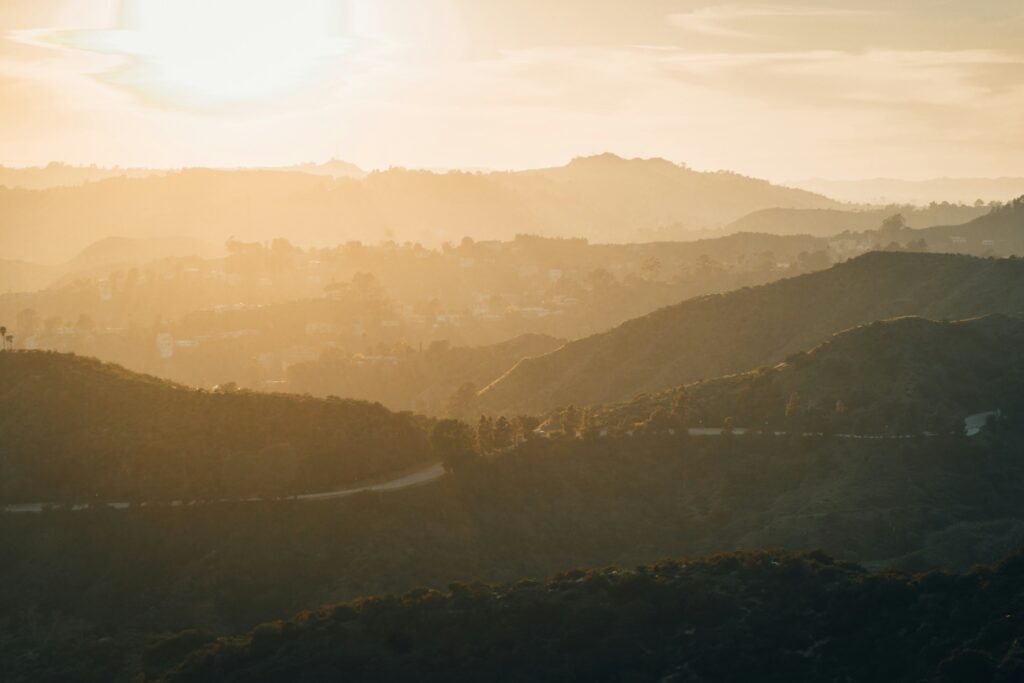
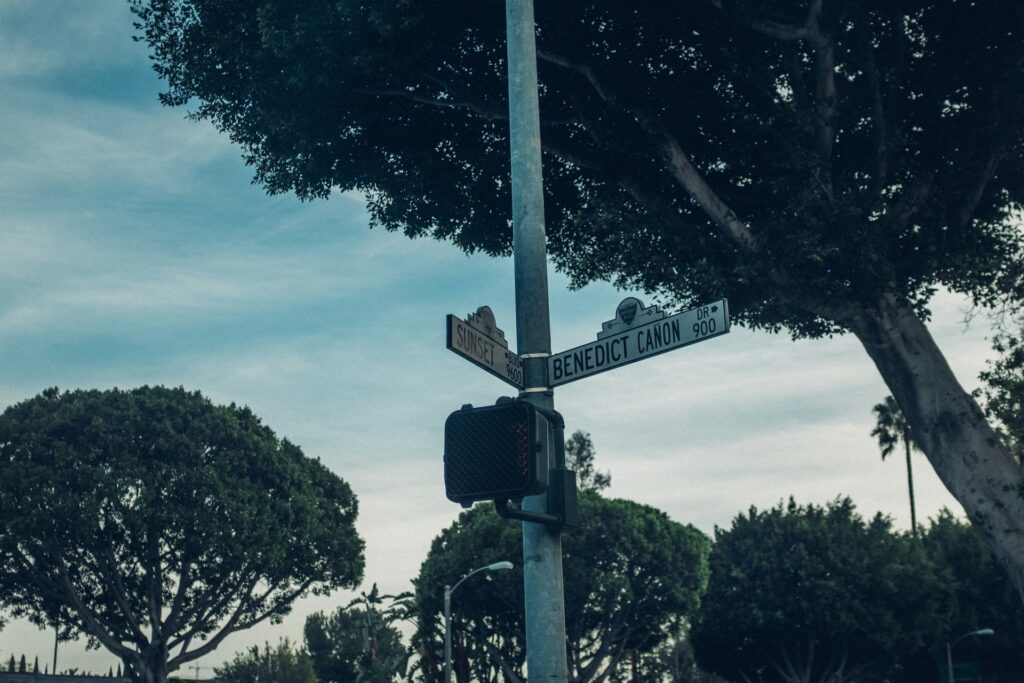
The road itself sets the tone. Benedict Canyon Drive begins politely in Beverly Hills, then slips into the hills like a ribbon curling through a secret garden. By the time you pass Tower Grove Drive, the scenery has shifted from manicured hedges to natural chaparral and towering trees. It feels less like a commute and more like a slow reveal—classic Los Angeles storytelling in asphalt form.
And the homes follow the same script.
Architecturally, Benedict Canyon is a living museum of LA residential design. Some of the earliest properties were built as country retreats for studio-era elites. Drive along Hutton Drive or Oak Pass Road and you’ll see original 1920s Spanish Colonial Revivals with hand-troweled stucco, red-tile roofs, and arched picture windows. These were homes designed for glamour before air conditioning, when cross-breezes mattered and courtyards were the social centers of life.
On Benedict Canyon Drive near the flats, gracious Wallace Neff–inspired estates still stand behind iron gates, their formal motor courts shaded by mature olive trees. Neff, one of Southern California’s most influential architects, helped define the romantic California style, and his influence is everywhere here: carved wood doors, wrought-iron railings, and balconies that look like they’re waiting for a leading actress to step out with a cup of coffee.
In fact, many did.
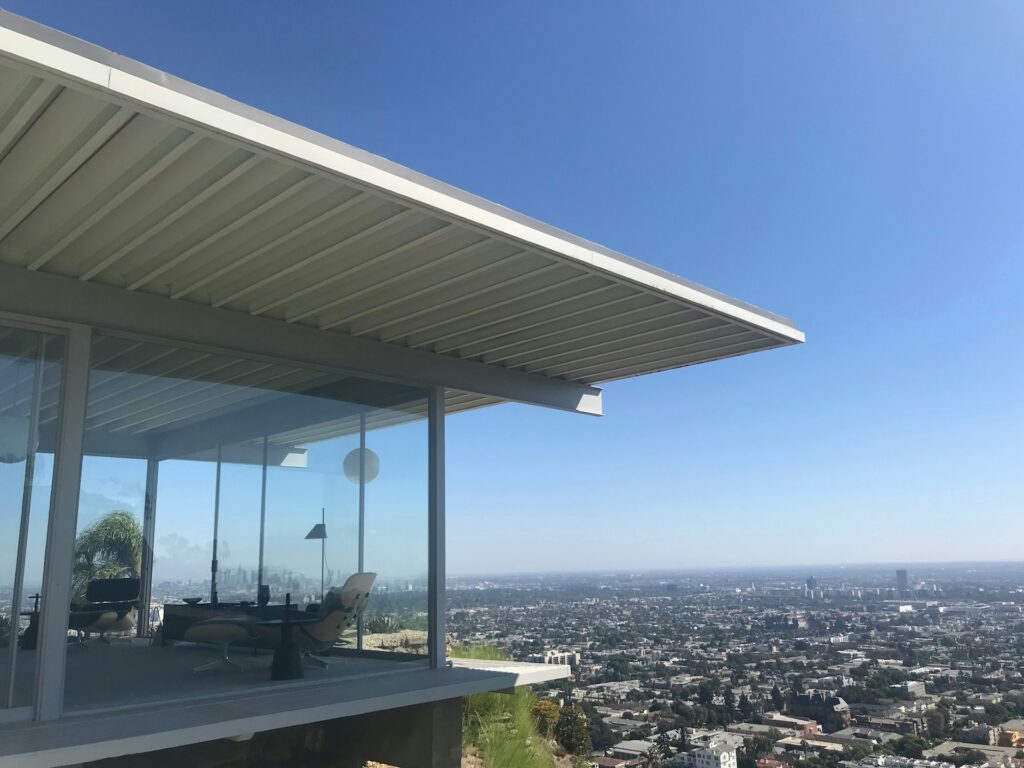
The canyon blossomed again in the 1950s and 60s with the rise of mid-century modernism. Tucked into the hillsides are authentic works reminiscent of A. Quincy Jones, Buff & Hensman, and John Lautner—homes with post-and-beam construction, flat planes of glass, and seamless indoor-outdoor flow. Unlike today’s glass boxes, these were experimental designs rooted in optimism and innovation. A driveway gate might hide a low-slung modern residence that appears modest from the street, then opens in back to a dramatic deck hovering in the trees.

Benedict Canyon is full of surprises.
Many of the larger parcels off Cielo Drive and Deep Canyon were developed as true compounds. You’ll find traditional East-Coast style residences with clapboard siding and brick fireplaces that feel imported from Connecticut, mixed comfortably beside California ranch homes with wide lawns—rare hillside luxuries made possible by the canyon’s unusually usable terrain.
That variety is part of its charm. There is no single “look” in Benedict Canyon, only a shared devotion to privacy and individuality.
And to history.
Long before gated communities became a marketing term, the gates of Benedict Canyon were purely functional. They protected the people inside—movie stars who needed places to breathe. One can imagine a young Judy Garland being driven up these curves to visit friends, leaving MGM behind for an afternoon. In those days, the canyon was dotted with discreet homes owned by agents, composers, and directors. No velvet ropes, just velvet living.
One of my favorite Benedict Canyon moments comes from a longtime resident who swears her grandmother attended a dinner party here in the late 1930s where the hostess insisted on serving cocktails in teacups “so the neighbors wouldn’t talk.” That is exactly the kind of detail that defines the neighborhood—elegant, a little mischievous, and determined to keep its secrets.
Even today, you can spot remnants of that playful Hollywood practicality. A seemingly serious Tudor-style home might contain a whimsical screening room added decades ago. A formal dining room in a 1926 Spanish could hide a brightly renovated kitchen updated by a new generation. Benedict Canyon has always known how to adapt without losing its soul.
It’s never been about façade alone.
The lifestyle here remains as architecturally balanced as the homes themselves. Because the canyon connects Beverly Hills to the Valley, it offers true utility. You can live in a significant architectural residence surrounded by nature and still make it to the Beverly Hills Farmers Market before the croissants sell out.
That’s a very modern luxury layered on a very vintage foundation.
And yet Benedict Canyon never feels rushed. Early mornings bring fog and birdsong. After winter rains, seasonal streams run beneath little bridges off Hutton and Ellison Drive. The canyon smells green. It looks green. It protects its residents with a quiet confidence.
Real community, real architecture, real privacy.
In a city constantly reinventing itself, Benedict Canyon is a reminder that Los Angeles was built canyon by canyon, dream by dream, architect by architect. Its gates may hide trophy properties, but more importantly they hide lives well lived in homes that actually mean something.
Behind the gates, that still matters.